
Correct crowding, spacing and bite problems with a dependable treatment that works continuously. At Christensen Orthodontics, we provide traditional braces in South Jordan, Utah, for children, teens and adults who need controlled tooth movement and personalized orthodontic care.
Dr. Todd Christensen has completed more than 2,000 traditional braces cases and has experience treating the full range of dental and skeletal alignment concerns. He will evaluate your teeth and bite, explain your options and determine whether traditional braces offer the right approach for your smile.
Call 801-446-5548 to schedule a braces consultation.
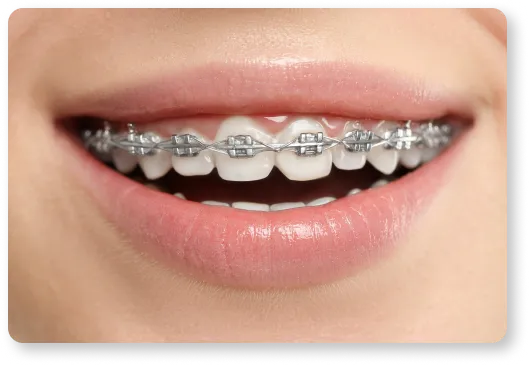
What Are Traditional Braces?
Traditional braces use brackets attached to the teeth and an orthodontic wire to guide teeth into improved positions. Small elastic ties hold the wire in place. During progress visits, our orthodontist makes planned adjustments that continue moving the teeth and correcting the bite.
Because braces remain attached throughout treatment, they do not depend on the patient remembering to insert removable trays. This makes them a reliable option for many age groups and a wide range of orthodontic needs.
Traditional braces may be recommended when a patient needs:
- Detailed control of individual tooth movement
- Correction of significant crowding or spacing
- Improvement of an overbite, underbite, crossbite or open bite
- Rotation or repositioning of several teeth
- A fixed appliance that works continuously
- Correction after teeth have shifted from previous treatment
- Coordinated treatment for more complex dental or skeletal concerns
The right treatment depends on your diagnosis. Dr. Christensen will explain whether traditional braces, Damon™ braces or clear aligners provide the control your case requires.
What Can Traditional Braces Correct?
Braces can improve concerns that affect the appearance, health and function of a smile. Teeth that overlap or sit too close together may be more difficult to brush and floss. Bite problems can also place uneven pressure on the teeth or make biting and chewing less comfortable.
Traditional braces may be used to treat:
- Crooked, crowded or overlapping teeth
- Gaps and uneven spacing
- Rotated or displaced teeth
- Upper teeth that extend too far forward
- Lower teeth that sit in front of the upper teeth
- Crossbites and open bites
- Teeth that do not meet evenly
- Orthodontic relapse after previous treatment
Treatment is not limited to making teeth look straighter. Dr. Christensen evaluates how the teeth, bite and jaws work together so the plan supports both function and smile appearance.
How Your Braces Treatment Is Planned
Your first visit includes a detailed evaluation of your teeth, bite, jaw relationships and treatment goals. Digital X-rays or an intraoral scan may be used to gather information that cannot be seen during a visual examination.
After reviewing the findings, Dr. Christensen will explain:
- What is causing the alignment or bite concern
- Whether traditional braces are recommended
- What movements the treatment will need to accomplish
- Whether elastics or another orthodontic appliance may be needed
- What responsibilities you will have during treatment
- How progress will be monitored
- How retainers will help maintain the final alignment
You will have an opportunity to ask questions and compare treatment options before deciding how to proceed.
Traditional Braces for Children, Teens and Adults
Braces can be used at different stages of life. The best time to begin depends on dental development, jaw growth, the condition being treated and the patient’s individual needs.
Braces for Children
Some children benefit from braces while their permanent teeth are still arriving. Others may need early care before comprehensive braces begin. Dr. Christensen has completed more than 5,000 early orthodontic cases and can determine whether treatment is needed now or whether the child should continue to be monitored.
Visit our Phase One Treatment page to learn more about early orthodontic care.
Braces for Teens
The teen years are a common time to begin braces because most permanent teeth have erupted while the jaws may still be developing. Fixed braces can also be helpful for teens who would prefer not to manage removable trays.
Our Teen Orthodontics page explains how treatment can fit around school, sports, music and other activities.
Braces for Adults
Adults can use traditional braces to correct long-standing crowding, spacing and bite concerns or to address teeth that have shifted since earlier treatment. Braces may also be recommended when the required movements would be difficult to manage with removable aligners.
Learn more on our Adult Orthodontics page.
Traditional Braces Compared With Damon Braces
Traditional braces and Damon braces are both fixed orthodontic treatments, but they hold the wire differently.
Traditional braces use elastic ties to secure the wire to each bracket. Damon braces use self-ligating brackets with a built-in mechanism that holds the wire.
Neither system is automatically right for every patient. Dr. Christensen has completed more than 2,000 traditional braces cases and more than 6,000 Damon cases. His experience with both systems allows him to recommend the bracket type that best fits the planned tooth movement and individual patient.
Traditional Braces Compared With Clear Aligners
Traditional braces and clear aligners can both create meaningful orthodontic improvements, but they work differently.
Braces are fixed to the teeth and work continuously. They may be well suited to complex movement, significant bite correction or patients who do not want responsibility for removable trays.
Clear aligners are removable and less noticeable. They can be taken out for meals and oral hygiene, but patients must wear them consistently and keep track of the trays.
You do not need to choose a treatment before your consultation. Dr. Christensen will compare the options based on your teeth, bite, goals and daily habits.
What To Expect After Braces Are Placed
It is common to feel pressure or tenderness when braces are first placed or after an adjustment. This usually improves as your mouth adapts. Orthodontic wax and other comfort measures may help with temporary irritation from a bracket or wire.
During progress visits, our orthodontist will:
- Check how your teeth and bite are responding
- Make adjustments based on the treatment plan
- Review elastic wear or other instructions
- Examine brackets and wires for damage
- Answer questions about comfort or home care
If a bracket comes loose, a wire feels sharp or something does not seem right, call 801-446-5548. Our team will explain whether you need an appointment and what to do in the meantime.
How To Care for Traditional Braces
Strong daily habits protect your teeth and help treatment progress. Food and plaque can collect around brackets and wires, so brushing and flossing require extra attention.
Patients with braces should:
- Brush carefully around each bracket and along the gumline
- Floss using the method and tools recommended by our team
- Avoid hard, sticky or chewy foods that can damage appliances
- Cut crunchy foods into smaller pieces when appropriate
- Wear elastics or other appliances as instructed
- Use orthodontic wax for temporary irritation
- Keep all scheduled progress visits
- Contact our office when a bracket or wire is damaged
Our team will demonstrate cleaning techniques and help you develop a routine that protects your teeth throughout treatment.
Living With Braces
Most patients adjust to braces after a short transition period. You can continue attending school, working, playing instruments and participating in most activities.
Patients who play contact sports may need an orthodontic mouthguard to protect their teeth, lips and appliances. Musicians who play wind or brass instruments may need time to adjust, but regular practice usually helps.
Braces are temporary, but maintaining the final result requires continued care. After active treatment, you will receive a retainer and instructions for protecting your new alignment.
Experience You Can Trust With Your Smile
Dr. Christensen has practiced orthodontics since 2014 and has treated more than 10,000 orthodontic cases. His experience includes more than 2,000 traditional braces cases as well as thousands of Damon, early treatment, clear aligner and relapse cases.
He completed dental school at the University of Nevada, Las Vegas, a general practice residency at the University of Utah, and an orthodontic residency with a Master of Science in Dental Medicine at the University of Colorado. He has also completed more than 1,000 hours of continuing education, with approximately 90% focused on orthodontics.
This training and case experience allow him to plan treatment around both the detailed correction of the bite and the appearance of the finished smile.
Frequently Asked Questions About Traditional Braces
How do I know if traditional braces are right for me?
Traditional braces may be recommended when you need controlled tooth movement, bite correction or a fixed appliance that does not depend on daily tray wear. Dr. Christensen will evaluate your teeth and compare braces with other appropriate options.
Are traditional braces only for children and teens?
No. Children, teens and adults can all benefit from traditional braces. The recommendation is based on the condition being treated and the movements required, not the patient’s age alone.
Do braces hurt?
Braces may cause pressure or tenderness when they are first placed and after some adjustments. This typically improves as your mouth adapts. Contact our office if discomfort is severe, sharp or does not improve.
What foods should I avoid with braces?
Avoid foods that are hard, sticky, chewy or likely to damage brackets and wires. Examples may include hard candy, gum and popcorn kernels. Our team will provide specific food guidance when your braces are placed.
What should I do if a bracket or wire breaks?
Call 801-446-5548 for guidance. Do not attempt to remove or repair the appliance yourself. Our team can provide comfort instructions and determine whether you need an appointment.
How long will I need to wear braces?
Treatment time depends on your bite, alignment, age, case complexity and how closely you follow instructions. Dr. Christensen will provide a personalized estimate after completing your evaluation.
Will I need a retainer after braces?
Yes. Teeth can shift after orthodontic treatment. Wearing your retainer as directed helps maintain the alignment achieved with braces.
Do you provide traditional braces near Riverton, Sandy and Herriman?
Yes. Christensen Orthodontics welcomes braces patients from South Jordan, Riverton, Sandy, Draper, West Jordan, Herriman and surrounding communities in Utah.
Schedule a Traditional Braces Consultation
Find out whether traditional braces can provide the control and correction your smile needs. Call Christensen Orthodontics at 801-446-5548 or contact our office to schedule a braces consultation in South Jordan, Utah.

 801-446-5548